
The threat is not abstract anymore
CrowdStrike said China-linked hackers used the AI tool ARTEX with a DeepSeek LLM and another model, and that the campaign targeted more than 200 organizations in 11 days and compromised at least nine organizations, as reported by Techmeme in April 2025. The point is not that a model became magical. The point is that intrusion work can now move at a pace that makes ordinary review queues part of the exposure.
In many security teams, the slowest part of incident handling is not detection. It is the sequence after detection: who reviews the alert, who decides whether it is real, who approves containment, who signs off on taking a system offline, who informs legal or leadership, and who accepts the business disruption that follows. Those steps are sensible when events arrive at human speed. They become a risk when machine-assisted intrusion activity can generate pressure faster than the approval path can absorb it.
That is the gap worth naming clearly. It is not attacker skill versus defender skill. It is machine speed versus human sign-off. A security program can have good tools, good analysts, and good playbooks and still lose time in the same place every week: the meeting, the inbox, the escalation note, the request for approval, the wait for someone with authority to reply.
A decision window is the short period in which a team can still contain an incident before delay turns a technical problem into a larger operational one; at work, it looks like a live alert queue filling up while containment waits on approval. If that window is shorter than the review chain, the review chain is now part of the attack surface.
That is also why model quality is not the first question here. The first question is whether the people on call already know what they may do without asking again. If every serious action still depends on fresh permission from three different places, then faster alerts do not create more safety. They create faster accumulation in front of a bottleneck.
WIRED reported that an AI agent used by an Accenture contractor sent information about a Department of Defense system, including login credentials, to a high-risk third-party website, according to WIRED in April 2025. That report points at the same operational problem from another angle. When software acts quickly around sensitive systems, accountability does not disappear. It concentrates on the people who still have to decide what happens next.
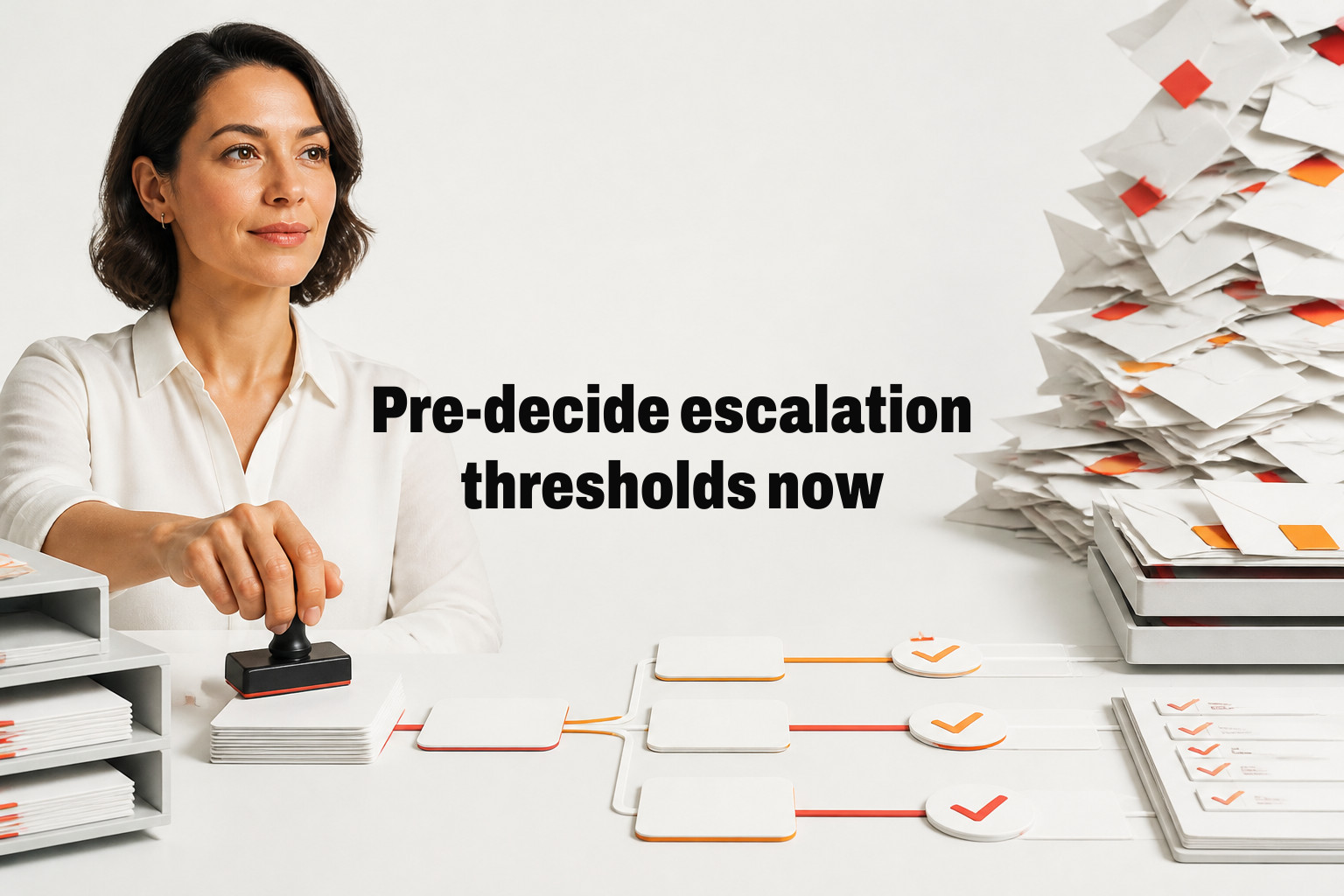
The first redesign is the review path
The practical response is not to demand perfect foresight from analysts. It is to remove avoidable hesitation from the containment path before the next fast alert flood arrives. A prepared team decides in advance which incidents can be isolated immediately, which require manager approval, which require legal review, and which systems have standing rules because the cost of delay is already known.
This shifts attention to escalation thresholds. A threshold is useful only if someone on shift can apply it without reopening the whole argument during the incident. If a host shows a known pattern tied to credential theft, can the on-call lead isolate it. If an external AI-connected tool touches a restricted environment, can access be revoked first and reviewed after. If the answer is unclear in the moment, the process is still designed for slower conditions.
The loss here is straightforward. When nobody has clear authority to contain, accountability remains with humans but action stalls inside the approval chain. The control that answers that loss is also straightforward: pre-decided authority attached to named conditions.
What to do this week
Write down who can escalate and contain which incidents without further sign-off. Keep it concrete. Name the incident types, the systems in scope, the person or role who may act, and the point where a second approval is required. If the list is hard to write, that is useful information. It means the review path, not the alert volume, is the first system that needs work.
Human Runtime Core™ is designed for the mental edge you need to survive in an AI-run world.