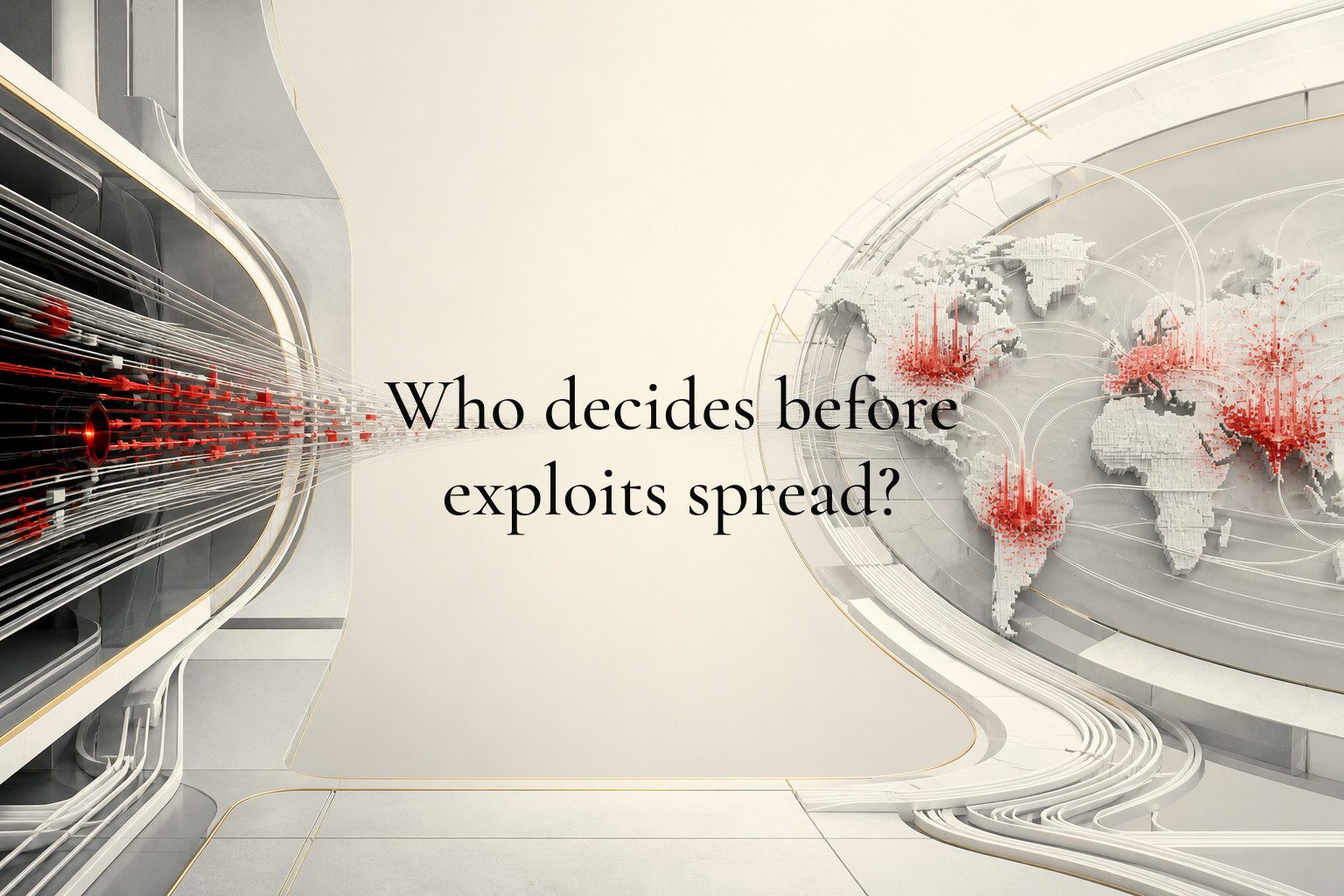
Who decides before exploits spread?
Security teams already know the painful part of many incidents. The signal often appears before the organization acts on it. What slows the response is not always detection. It is triage, escalation, ownership, and the argument over whether this case is severe enough to justify disruption.
That gap is becoming easier to see. Amazon Web Services logged attempts to leverage the PHP2Shell bugs four days before they were described as broadly exploited across the internet, as noted in this WIRED post. The important fact is not just that activity was visible. It is that visible activity and broad exploitation sat close together.
Maintainers were also not speaking in vague terms. PHP maintainers told web developers to prepare for critical security patches, according to this Ars Technica post. That is the kind of warning that tests whether a team has already decided what preparation means in its own environment.
This is the horizon for security work this month. The question is not whether humans can personally inspect every signal faster than machine-speed attack cycles. The question is whether human systems can avoid spending the narrowest part of the window debating authority.
One observer of AI and work framed the moment directly as attack and defense accelerating at inhuman speeds while human systems still need to react, in this Ethan Mollick post. That framing does not prove a specific operational rule by itself. But it clarifies the pressure on security organizations that still route key actions through uncertain chains of approval.
What gets lost in that setup is not only time. The decision seat goes missing. An alert exists, a patch warning exists, exploit activity spreads, and nobody is clearly empowered to say what happens next. In that world, accountability remains human while the decision path fragments.
Predeclare the trigger and authority
The durable response is not trying to make every person react at machine speed. It is deciding in advance which alert categories bypass debate. A prepared team reduces the number of judgments that must be invented during the incident itself.
That means naming one class of signal that triggers immediate action without a fresh argument over seriousness. It also means naming who can declare severity, who gets paged, and what first action happens before a meeting forms around the issue. The action may be temporary containment, accelerated patch evaluation, internet exposure review, or a prewritten escalation path. The article does not need a universal playbook to make the point. The point is to remove uncertainty from the first human handoff.
This is where the human role still matters. Someone has to define the threshold, assign authority, and make sure the response is proportionate to the warning. The fragile point is not the log line. It is the organization waiting to decide whether the log line counts.
A useful test is simple. If the same combination appeared again tomorrow — observed exploit attempts, maintainer warning, and signs that broader exploitation could follow — would the first hour be governed by a rule or by negotiation. If it is negotiation, the window is already being spent.
The practical takeaway for this week is to define one alert category that bypasses debate. Write down who can declare severity, who gets paged, and what immediate action happens before the next similar warning lands.
Human Runtime Formula™ is designed for the mental edge you need to survive in an AI-run world.