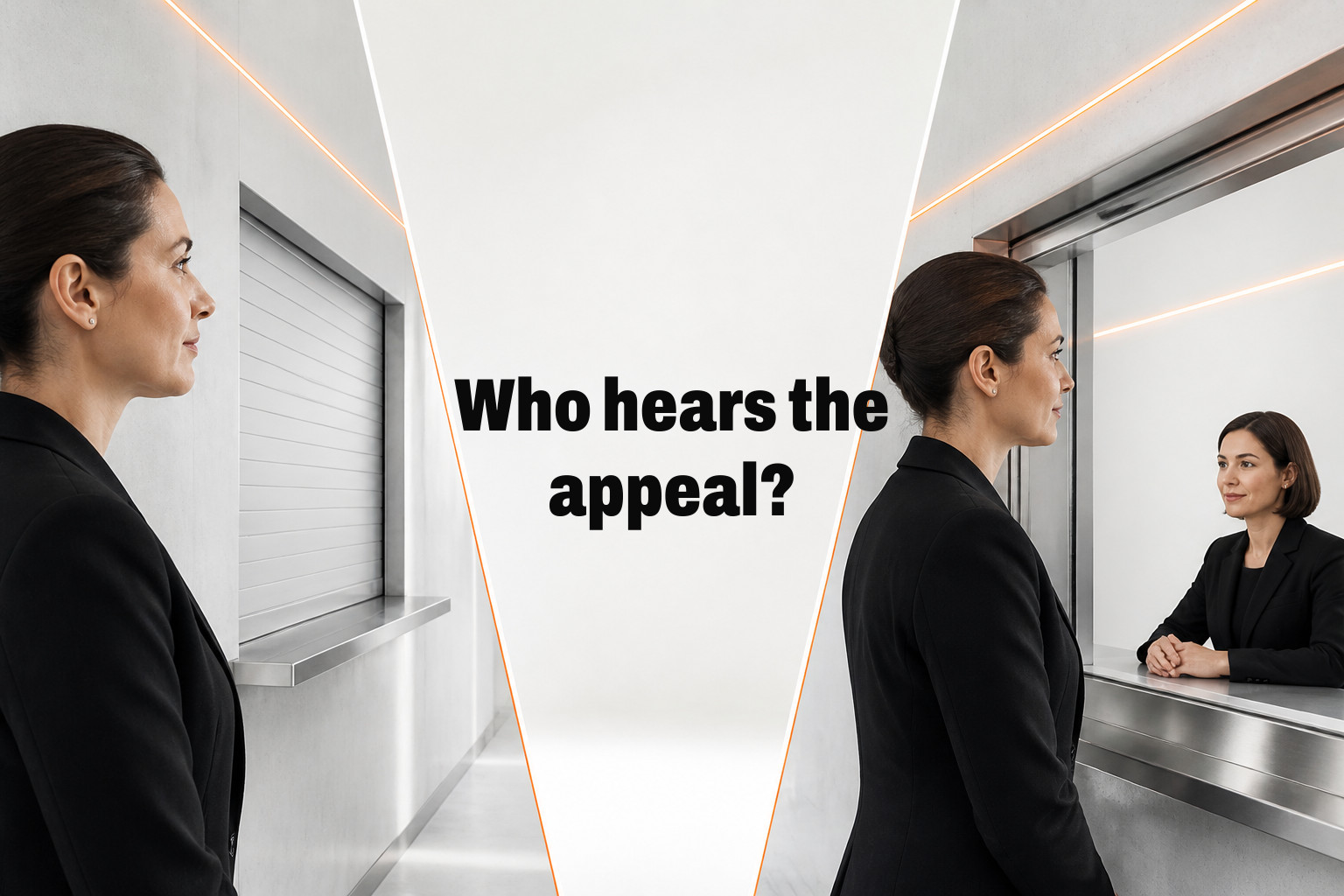
Who hears the appeal?
Anthropic said this month that it is expanding its partnership with the US General Services Administration and bringing Claude to federal, state, local, tribal, and territorial governments, as Anthropic said in April 2025. That is not a lab demo. It is software moving closer to public work.
A separate sign of the same direction came from the courts. WIRED reported this month on comments from Geoffrey Vos, a senior judge in England, who said AI could adjudicate plenty of civil cases and asked where the line should be drawn, as WIRED reported in April 2025. That does not mean courts have handed over judgment. It does make the boundary question concrete.
The common discussion asks whether these systems are good enough to help decide. That matters, but it is not the whole problem. In public systems and adjudication, accuracy does not settle legitimacy. A correct-looking answer can still leave the losing person with no visible way to challenge it, no named person to review it, and no place where responsibility clearly sits.
When software gains operating authority, the loss is not only a bad output. The loss is the reopen point. If a housing determination, benefits action, permit review, civil claim, or other official decision is shaped by an AI system, the question after a bad result is plain: who can hear the appeal? If the answer is vague, the system has already given away something important before anyone measures model quality.
A decision window is the plain, named route by which a person can ask for a decision to be reviewed, escalated, and reopened by a human, and it looks like a posted contact, a defined review step, and a person or office with authority to change the result. Public institutions already know how to do versions of this. The issue is whether they keep that route visible when AI enters the workflow.

Design the human reopen path
The useful move is to change the preparedness question. Do not start with prompting. Start with appeals. If a department, court, agency, or contractor brings AI into a workflow that can deny, rank, flag, route, or recommend, ask where the decision window is, who owns it, and what can be reopened through it. That is a governance question before it is a product question.
A particularly prepared person can still act here, even without deciding procurement or policy alone. In meetings, reviews, and implementation documents, the human task that matters is to insist that the appeal path be specified before the system is treated as operational authority. If there is a queue for errors but no route for reconsideration, that is not an appeal path. If there is a help desk but no named reviewer with power to reverse a result, that is not an appeal path either.
What to ask for this week
Use a short test:
- What decisions can the system influence or effectively settle?
- Who can a person contact to challenge one of those decisions?
- What is the exact step for escalation to a human reviewer?
- Who has authority to reopen and change the result?
- Where is that route communicated to the person affected?
These are ordinary questions, but they change the conversation. They move it away from admiration for software capability and back toward accountability for a decision. That is the part institutions can design on purpose.
If AI gains operating authority, the human role that matters most is designing and demanding a clear route to appeal, escalate, and reopen decisions.
Human Runtime Core™ is designed for the mental edge you need to survive in an AI-run world.